The Secret Feature Every Maid of Honor Needs: Sharing the Countdown with the Wedding Party
The Secret Feature Every Maid of Honor Needs: Sharing the Countdown with the Wedding Party
Being a maid of honor is thrilling—but let's be honest, it can also feel like you're juggling ten things at once while wearing heels. You're the bride's right hand, the emotional support, the logistics coordinator, and somehow also responsible for making sure everyone knows what time the hair appointment is. The chaos multiplies when you realize that managing all these moving pieces with a scattered wedding party is like herding cats in designer dresses. There's one game-changing solution that most maids of honor overlook: a shared countdown system that syncs everyone's schedules and keeps the whole crew on the same page. This isn't about fancy apps or complicated tools—it's about creating a single source of truth that transforms wedding planning from stressful to manageable. Let's explore why this simple feature is actually a wedding-day lifesaver.
The Maid of Honor's Real Challenge: Information Chaos
The core problem maids of honor face isn't actually the planning itself—it's keeping everyone informed. You've probably experienced this: you send a text about the bridal shower date, and three days later someone asks "Wait, when is it again?" You create a group chat, and important details get buried under a thousand memes and random comments. A bridesaid texts asking about dress colors while another asks about the bachelorette party budget, and suddenly you're fielding the same questions repeatedly.
What happens is this: the more people involved, the more communication breakdowns occur. People have different communication preferences, different alert systems, and different levels of attention. Aunt Susan checks Facebook, your college friend lives in Slack, and the bridesmaids are scattered between WhatsApp and regular text. The bride is stressed about a million wedding details, so she doesn't need to be bothered with "Wait, what time do we meet?" questions on the morning of the rehearsal dinner.
This is where a shared countdown with an actual timeline becomes your secret weapon. It's not just about the numbers ticking down—it's about having every single detail visible to everyone at all times.
Why a Shared Countdown Works When Nothing Else Does
A countdown timer isn't just a novelty feature; it's a psychological tool and an organizational system rolled into one. When everyone can see "14 days until the wedding," it creates a sense of collective momentum. People feel part of something bigger than themselves, and that matters.
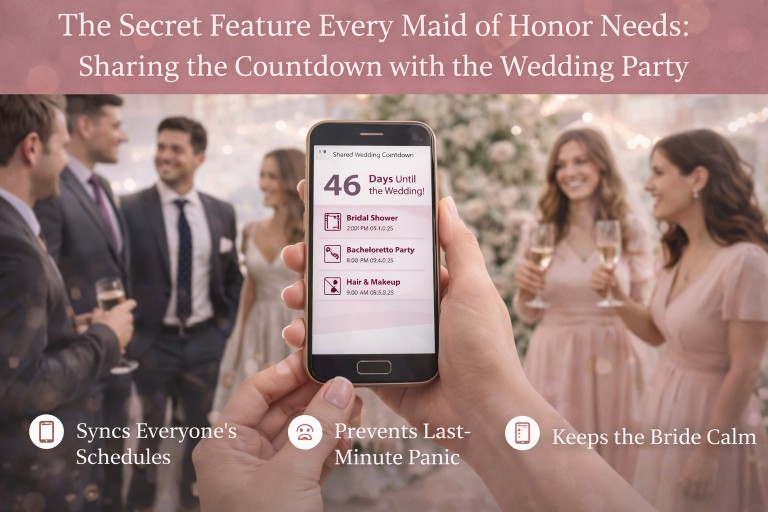
But more importantly, a shared countdown works because it centralizes information. Instead of the maid of honor sending out multiple messages ("Remember, hair at 9 AM!" "Limo pickup at 3 PM!" "Ceremony starts at 4 PM!"), everyone can pull up a single timeline and see every milestone. Hair appointment? There. Limo pickup? There. Rehearsal dinner location and time? All there. This eliminates the friction of scattered communication.
The real magic happens when that countdown connects to an actual schedule everyone can access. Not just a big number counting down, but specific time blocks tied to specific tasks. Bridesmaid Sarah doesn't have to wonder if she should show up at 9 AM or 10 AM—she can open the shared timeline and see exactly when she needs to arrive and where. The groomsmen know when to pick up their tuxedos. The photographer knows where to meet everyone first. It's all transparent.
The Practical Benefits That Actually Change Your Life
Let's get specific about what this does for you as the maid of honor. First, it dramatically reduces your text burden. Instead of being the sole keeper of information, you're curating and managing one central location that people actually use. When someone asks "What time is hair?" you can say "Check the shared timeline" instead of texting them the same answer for the fifth time.
Second, it keeps the bride calm. Wedding planning is stressful, but the bride doesn't need the added stress of wondering if everyone knows what's happening. When she can see that the timeline is complete and everyone has access to it, she can actually enjoy the final weeks leading up to her big day.
Third, it catches mistakes before they become disasters. If the timeline says "Meet at 2 PM" but you realize that actually leaves no time for photos, you catch it when you're looking at the whole picture, not when you're texting timeline pieces to different people. It's like the difference between reading a full document versus reading texts sent one by one—you see the gaps.
Finally, it builds excitement and unity among the wedding party. When everyone can see the countdown together, there's a shared sense of anticipation. People feel more invested because they can literally see how close the big day is getting.
Making It Actually Work: What to Include
The best shared countdowns aren't overcomplicated. You don't need a fancy app that requires everyone to learn a new interface three weeks before the wedding. You need something simple and accessible to basically everyone.
The essentials: the wedding date and time (obviously), the rehearsal dinner details, hair and makeup times and locations, what time the limo arrives, where photos happen, parking information, the ceremony start time, reception details, and any getting-ready activities. Include outfit details too—what time should bridesmaids be in their dresses?
Some maids of honor also add milestone checkpoints leading up to the wedding. Dress fitting deadline. RSVP deadline. Bachelor and bachelorette party dates. Final headcount needed by this date. These give you natural reminders to follow up with people who've gone radio silent.
Make sure the timeline is readable on a phone. Seriously. Nobody is pulling up a desktop document the morning of the wedding. They're checking their phone while putting on makeup. If it's hard to read or navigate on mobile, people won't use it.
The Surprising Side Effect: Less Drama, More Joy
Here's what happens when you implement a shared countdown properly: drama decreases. Conflict often stems from miscommunication or feeling left out. When everyone has access to the same information at the same time, you eliminate so many opportunities for people to feel confused or forgotten. Someone can't show up late because they "didn't know what time" things were. Someone can't act hurt because they feel like they weren't included in the planning.
More than that, it actually increases joy. The whole wedding party gets to participate in the anticipation together. It's not just the bride and maid of honor watching the countdown; everyone is in it together. People start feeling more connected to each other and more excited about the event itself.
Moving Forward: Your Secret Advantage
The best maids of honor aren't the ones who handle everything alone—they're the ones who set systems in place that make things easier for everyone. A shared countdown is one of those systems. It's low-effort to set up, requires almost no ongoing maintenance, and delivers huge payoffs in reduced stress and increased coordination.
Start with the basics: a Google Doc, a shared calendar, or a dedicated group chat pinned to the top with the timeline clearly laid out. The tool matters less than the commitment to keeping it updated and accessible. Once you implement this, you'll wonder how you ever organized a wedding without it. Your bride will be calmer. Your wedding party will be more organized. And you'll actually enjoy being the maid of honor instead of just surviving it. That's the real secret feature—not some fancy technology, but the power of shared information and collective clarity.