
Wedding Day Timeline: A Minute-by-Minute Guide for a Stress-Free Day
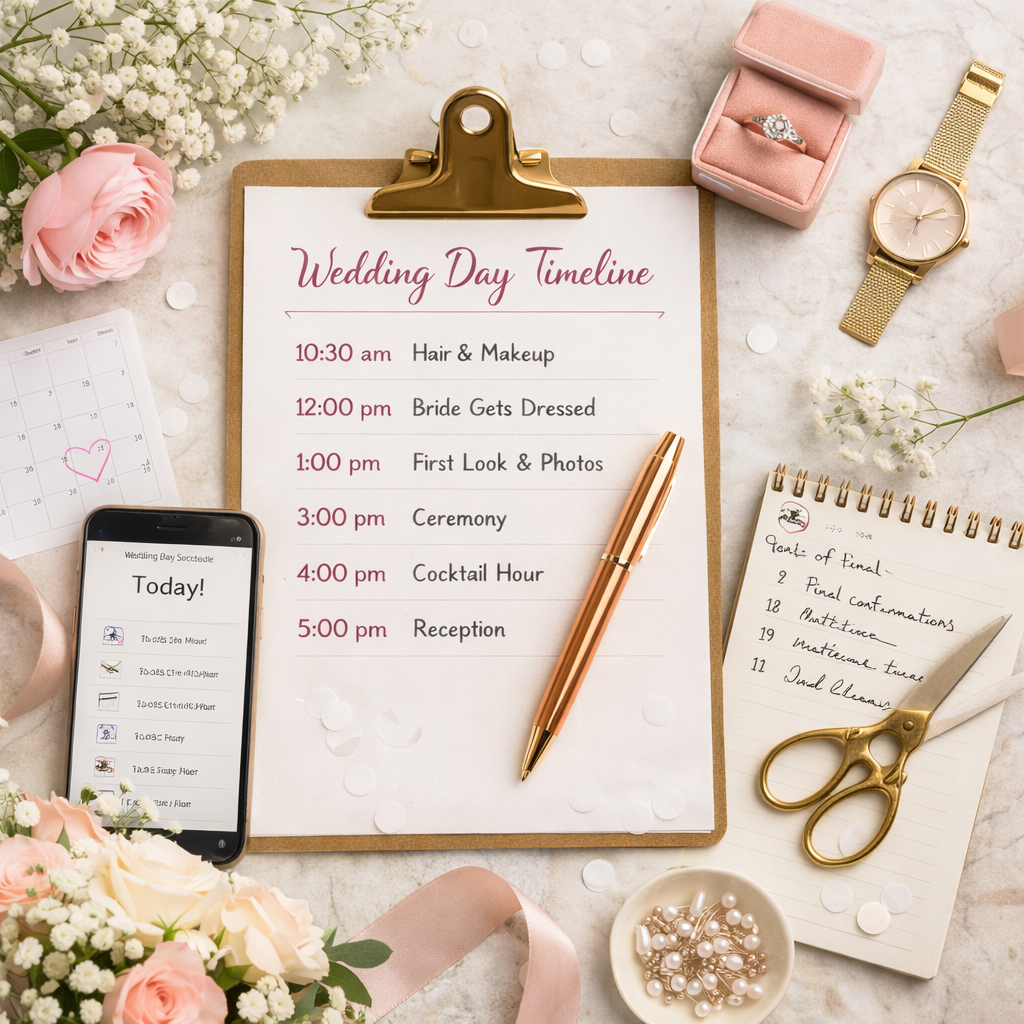
Wedding Day Timeline: A Minute-by-Minute Guide for a Stress-Free Day
You're 20 minutes behind schedule before you've even zipped up your dress. Your photographer is chasing you down for family portraits during cocktail hour. By the time you sit down for dinner, you realize you haven't actually talked to your new spouse all day. Sound familiar?
Here's the truth wedding planners wish more couples understood: your timeline isn't a military operation. It's a roadmap for one of the best days of your life, and if you build it right, you'll actually get to enjoy that day instead of just surviving it. After talking to veteran wedding photographers and planners who've seen hundreds of celebrations unfold, I've learned that the best timelines aren't the most detailed ones—they're the ones with breathing room built in.
Stop Planning Every Single Minute
The biggest mistake? Trying to account for every second from 8:00 a.m. to midnight. Real life doesn't work that way, and your wedding won't either. Someone's going to take longer in the bathroom. Traffic happens. Your maid of honor will need an extra safety pin. These aren't problems—they're normal.
Professional photographers recommend thinking in blocks, not minutes. Divide your day into three main chunks: getting ready, ceremony, and reception. Within each block, identify what absolutely must happen and what's flexible. This approach gives your vendor team room to adapt when (not if) something shifts.
The Getting-Ready Phase: Add More Time Than You Think
Most couples underestimate this part dramatically. If you're getting your hair and makeup done professionally, plan for about 45-60 minutes per person. That means if you have four bridesmaids getting glammed up, you're looking at three to four hours before anyone's even dressed.
Start your day earlier than feels necessary. Seriously. If your ceremony is at 4:00 p.m., your hair and makeup team should arrive by 10:00 or 11:00 a.m. This cushion gives you time to actually eat breakfast, take a few deep breaths, and capture those quiet moments before everything ramps up.
One photographer put it perfectly: "Once the bride is fully dressed and the room settles, something powerful happens. The energy becomes still. The emotions deepen." But you can't experience that magic if you're frantically pinning your veil while running out the door.
The First Look Debate: It's Not About Tradition, It's About Time
Skipping a first look might feel romantic, but it can wreck your timeline. Here's why: if you wait until after the ceremony to take couple portraits, you're either stealing time from your cocktail hour (when you should be greeting guests) or pushing your reception schedule back.
A first look gives you a private moment together before the chaos begins. You get those butterflies settled, knock out your portraits in good light, and actually arrive at your reception ready to party. You'll still get that emotional aisle moment—trust me, seeing your partner walk toward you hits hard whether it's the first time or the second time you're seeing each other that day.
Travel Time: The Silent Schedule Killer
Multiple locations sound dreamy in theory. In practice? They're exhausting. A 20-minute drive between your ceremony and reception venue becomes 45 minutes when you factor in loading everyone into cars, actual travel time, and getting settled at the new spot.
If you're set on separate venues, be honest about the logistics. Block out at least an hour for transitions. Better yet, keep your ceremony and reception at the same location or within walking distance. Your guests (and your timeline) will thank you.
Build in the Pause You'll Actually Need
After you say "I do," you'll be riding an emotional high. You'll also probably need to pee, touch up your makeup, or just breathe for a second. Schedule 10-15 minutes of private time as a couple right after the ceremony. Not for photos—just for you two.
This tiny buffer does something remarkable: it lets the reality sink in. You're married. This person is your spouse now. Take a minute to feel that before jumping back into host mode.
The Reception: Where Things Can Spiral Fast
Dinner service takes longer than you think, especially if you're doing a plated meal for 150 people. Plan for at least 45 minutes to an hour. Speeches? Assume 5-7 minutes each, and limit them to three or four people max. Unplanned toasts from Great Uncle Bob can derail your whole evening, so give your MC permission to politely wrap things up.
The cake cutting should happen after dinner but before everyone's too full or too tipsy to care. Golden hour portraits (if you're doing them) need to happen about an hour before sunset—work backward from there.
What Actually Matters: Quality Over Quantity
Want to include five outfit changes, a choreographed entrance, a send-off with sparklers, AND a dessert bar grand reveal? Cool. But something's got to give. Every "extra" moment you add needs time—not just for the event itself, but for transitions.
One planner's advice stuck with me: "Design a wedding weekend experience so you're not worried about accomplishing it all on one day." If you want multiple looks or elaborate activities, spread them across a welcome party, the wedding day, and a farewell brunch. You'll be more present for each moment instead of racing through them.
The Buffer Time Rule
For every major transition, add 15-30 minutes of buffer time. Between ceremony and reception? Buffer. Between dinner and dancing? Buffer. Before any time-sensitive moment like a choreographed dance or a surprise performance? Buffer.
This padding isn't wasted time—it's insurance against the inevitable small delays that compound throughout the day. And if you stay on schedule? That extra time becomes a gift where you can relax, chat with guests, or sneak away for an unplanned couples portrait.
Your Timeline Isn't Set in Stone
Even the most thoughtfully planned schedule should flex. Weather changes plans. Emotions take longer than expected. A surprise toast happens. These aren't failures—they're part of what makes weddings feel alive and human.
The secret is building flexibility into your structure from the start. Work with vendors who know how to adapt and a planner who can make real-time calls without panicking. Your timeline should serve you, not stress you out.
What to Communicate to Your Team
Once you've blocked out your day, share it with everyone: your photographer, videographer, DJ, caterer, florist, and planner. Make sure they have each other's contact information. The more your team can coordinate directly, the less you have to play traffic controller on your actual wedding day.
Give your planner or day-of coordinator the authority to make judgment calls. If you're running behind and golden hour is approaching fast, trust them to shuffle portrait timing or suggest skipping a less important photo op.
The Bottom Line
Your wedding timeline should feel like a gentle guide, not a stopwatch. Build in space for spontaneity, emotion, and the unexpected moments that become your favorite memories. Start early, add buffers, limit transitions between locations, and don't pack in so many activities that you forget to actually experience your celebration.
The couples who enjoy their weddings most aren't the ones who executed every minute perfectly. They're the ones who stayed present, trusted their team, and gave themselves permission to let go of rigid control. Your timeline is there to support your day—not dictate it.